Making the switch to an electric vehicle is exciting—lower running costs, reduced emissions, and a quieter, smoother driving experience. But to truly unlock the benefits of EV ownership, you need convenient, reliable charging at home.
Public charging stations have their place for longer journeys, but they can’t compete with the simplicity of plugging in at home each evening and starting every day with a full battery. For most EV owners, home charging handles 80-90% of their charging needs.
If you’re considering installing an EV charger at home, this comprehensive guide will walk you through everything you need to know—from understanding the different types of chargers to navigating the installation process and making the most of your new home charging setup.
Why Install a Home EV Charger?
Before diving into the technical details, it’s worth understanding why home charging is such a game-changer for EV owners.
Convenience is the biggest factor. Rather than planning trips around public charging stations or waiting in queues, you simply plug in when you park at home. Your car charges while you sleep, eat dinner, or relax—no different from charging your mobile phone overnight.
Cost savings are substantial. Public rapid chargers can cost 60-80p per kWh, while home electricity typically costs 24-30p per kWh on a standard tariff, or as little as 7-12p per kWh if you switch to an EV-friendly tariff with cheap overnight rates. For an average driver covering 10,000 miles annually, that’s a saving of £800-£1,500 per year.
Time efficiency matters too. Rather than spending 20-40 minutes at a public charger, you’re using time you’d be at home anyway. Over a year, you’ll save dozens of hours that would otherwise be spent on charging detours.
Understanding EV Charger Types and Speeds
Not all EV chargers are created equal. Understanding the options will help you choose the right setup for your needs.
Charging Speeds Explained
3kW Chargers (Level 1) use a standard 13-amp plug socket. While technically possible, charging from a regular socket is slow—adding roughly 10-15 miles of range per hour. It’s fine for occasional use or plug-in hybrids with small batteries, but most pure EV owners find it too slow for daily use. There are also safety concerns with sustained high loads on standard sockets over many hours.
7kW Chargers (Level 2) are the sweet spot for most UK homes. They run on a 32-amp circuit and add approximately 25-30 miles of range per hour. For the average EV with a 60kWh battery, a full charge takes 8-10 hours—perfect for overnight charging. Most modern homes can accommodate a 7kW charger without major electrical upgrades.
22kW Chargers require three-phase power, which most UK homes don’t have (though some newer builds and rural properties do). They’re faster, but unless you have three-phase supply and regularly need very rapid home charging, the extra cost isn’t usually justified. Even if you have three-phase power, your car’s onboard charger might not accept more than 7kW or 11kW anyway.
Smart Chargers vs Basic Chargers
Basic chargers simply deliver power when plugged in. They work, they’re reliable, and they’re slightly cheaper—but you’re missing out on useful features.
Smart chargers connect to your home WiFi and offer capabilities that can save money and provide greater control:
- Scheduled charging allows you to charge during off-peak hours when electricity is cheapest
- App control lets you start, stop, and monitor charging from anywhere
- Load balancing prevents tripping your circuit breaker by managing power distribution
- Solar integration prioritizes using your own solar power before drawing from the grid
- Charging data shows your energy use, costs, and carbon savings
- Over-the-air updates add new features and improvements over time
The price difference is typically £150-£300, but smart chargers often pay for themselves through off-peak charging savings alone.
Tethered vs Untethered
This choice comes down to convenience versus flexibility.
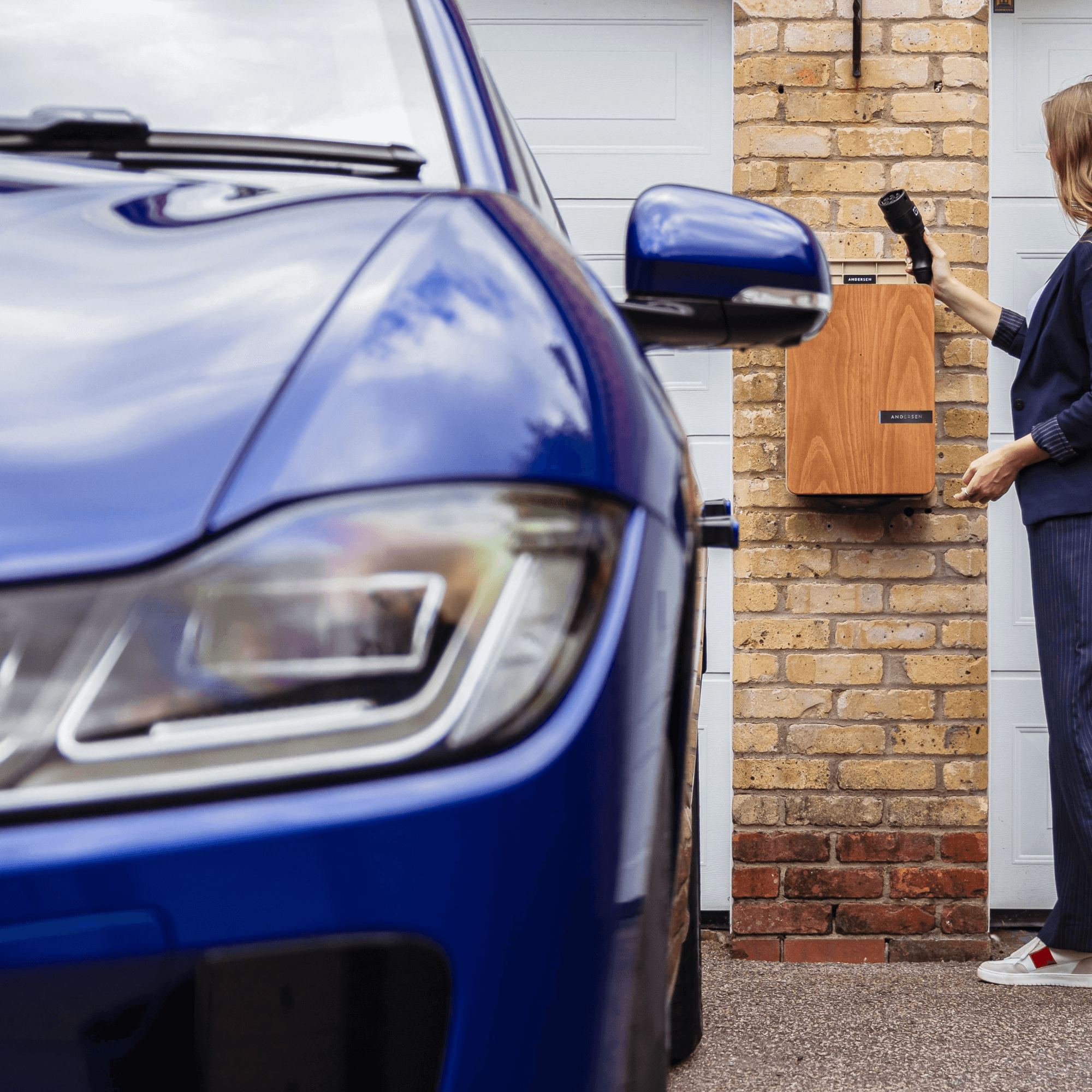
Tethered chargers have a permanently attached cable (usually 5-7 metres long). You pull the cable out, plug it into your car, and you’re done. It’s the most convenient option if you have one EV and park in the same spot. The cable stays protected in the unit when not in use, though in winter months it can become stiff or collect dirt.
Untethered chargers have just a socket—you use your car’s own charging cable. This offers flexibility if you have multiple EVs with different plug types, or if you want to keep the cable in your car boot. However, you’ll need to fetch the cable each time, and your car’s cable might not be as long as a tethered unit’s cable.
Most homeowners opt for tethered chargers for the added convenience, but both options work perfectly well.
Assessing Your Home’s Suitability
Most UK homes can accommodate an EV charger, but there are some factors to consider.
Electrical Capacity
Your home’s electrical system needs to handle the additional load. A 7kW charger draws 32 amps—roughly the same as an electric shower. If your consumer unit (fuse box) is modern and your supply capacity is adequate, this is usually straightforward.
Homes built after 2000 typically have no issues. Older properties might need:
- A consumer unit upgrade if you still have old fuse wire or insufficient circuit capacity
- Earthing system improvements, particularly in homes built before the 1980s
- Occasionally, a supply upgrade from your Distribution Network Operator, though this is rare
A qualified installer will assess all this during an initial survey and let you know if any preparatory work is needed.
Parking and Installation Location
The ideal setup is a dedicated parking space (driveway, garage, or allocated parking bay) close to your consumer unit. However, EV chargers can be installed in various scenarios:
Attached garages are straightforward—short cable runs and weather protection.
Driveways work well with wall-mounted chargers. The charger typically mounts on your house exterior wall, with the cable reaching your parking spot.
Detached garages require cable runs from your main house to the garage, which increases cost but is certainly achievable.
On-street parking without a dedicated space makes home charging impractical. In these cases, workplace charging or public chargers become more important.
Shared driveways or parking areas can work, though you’ll need to ensure the cable doesn’t create a trip hazard for neighbors. Some installations use cable management systems or overhead cable runs.
Planning Permission and Permissions
The good news is that most home EV charger installations fall under permitted development rights in England, meaning you don’t need planning permission. This applies provided:
- The charger is installed on a wall or within the boundary of your property
- Only one charging point is installed
- The charger doesn’t protrude more than 0.3 metres from the wall
Exceptions where you would need planning permission:
- Listed buildings
- Properties in conservation areas
- Flats or maisonettes
- If you live in a national park, Area of Outstanding Natural Beauty, or World Heritage Site
If you’re in a leasehold property, check your lease terms—you may need permission from your freeholder or management company.
The Installation Process: What to Expect
Understanding the process helps you know what’s involved and what to expect on installation day.
Step 1: Initial Consultation and Site Survey
A qualified installer visits your property to assess:
- Your parking arrangements and preferred charger location
- The route from your consumer unit to the installation point
- Your existing electrical setup and capacity
- Any potential complications or necessary upgrades
This survey typically takes 30-45 minutes. The installer will discuss your EV, your typical driving patterns, and recommend the most suitable charger type for your needs. You’ll receive a detailed, fixed-price quote with no hidden costs.
Step 2: Choosing Your Charger
Based on the survey and your budget, you’ll select your charger. Your installer can guide you through the options, explaining the pros and cons of different models and features.
Consider:
- Do you want smart features and app control?
- Tethered or untethered?
- What charging speed do you actually need based on your driving patterns?
- Does the charger’s design and finish suit your property?
Step 3: DNO Notification
For installations over 3.5kW (which includes all 7kW chargers), your installer must notify your local Distribution Network Operator (DNO). This is a legal requirement under the Energy Networks Association G98 regulations.
Don’t worry—this is a straightforward administrative process that your installer handles. The DNO needs to know about the additional load on the local network, but approval is almost always automatic. This notification is included in professional installations.
Step 4: Installation Day
The actual installation typically takes 3-5 hours, depending on complexity. Here’s what happens:
Electrical work: The installer runs a dedicated circuit from your consumer unit to the charger location. This might involve drilling through walls, running cable through your loft or under floors, or external cable runs in protective conduit.
Charger mounting: The charging unit is securely mounted to the wall at an appropriate height (typically 1.2-1.5 metres from the ground).
Connection and testing: All electrical connections are made, the charger is connected to your WiFi (for smart chargers), and comprehensive testing ensures everything works safely.
Commissioning: The installer demonstrates how to use your charger, sets up the app if applicable, and provides all necessary documentation including electrical certificates.
Most installations require you to be home for access, but the installer works outside or in garages for most of the process, so it’s not disruptive to your day.
Step 5: Certification and Completion
Upon completion, you’ll receive:
- An electrical installation certificate proving compliance with BS 7671 wiring regulations
- Warranty documentation for both the charger unit and installation work
- User manual and setup instructions
- DNO notification confirmation
Your installer should also explain your warranty terms and who to contact for any future support or questions.
Costs and What You’ll Pay
Most homeowners pay between £800 and £1,500 for a complete installation, though this varies based on:
- Charger model and features (smart vs basic, premium vs budget)
- Installation complexity and cable run distance
- Any necessary electrical upgrades
- Your chosen installer’s rates
While direct government grants for homeowners ended in 2022, some local authorities offer support schemes, and flat owners or those in rental properties may qualify for the EV Chargepoint Grant worth up to £350.
Even without grants, the investment typically pays for itself within 1-2 years through charging cost savings compared to public charging.
Choosing the Right Installer
The quality of installation matters as much as the charger itself. Look for:
Proper qualifications: Installers should be registered with NICEIC, NAPIT, or another competent person scheme. They should also be OZEV-approved (Office for Zero Emission Vehicles) if you’re claiming any grants.
Experience: Ask how many EV chargers they’ve installed. This is a specialized skill—your regular electrician might not have specific EV charging experience.
Insurance: Check they have public liability insurance and professional indemnity cover.
Transparent pricing: Detailed quotes with clear breakdowns, no hidden costs.
Warranties: Both the charger manufacturer warranty and a workmanship warranty from the installer.
Reviews and references: Check online reviews and ask for examples of recent installations.
Get at least three quotes to compare not just price but also the level of service and professionalism.
Making the Most of Your Home Charger
Once installed, a few simple practices will maximize your savings and convenience:
Switch to an EV electricity tariff if you haven’t already. Tariffs like Octopus Go, OVO Charge Anytime, or EDF GoElectric offer significantly cheaper overnight rates specifically for EV owners. Combined with smart charging, you could pay 7-12p per kWh instead of 24-30p.
Set up scheduled charging to automatically charge during off-peak hours. Most smart chargers and even many EVs themselves allow you to set charging windows.
Monitor your usage through your charger’s app to understand your charging patterns and costs.
Keep the charger clean and occasionally check the cable for damage, particularly if it’s exposed to harsh weather.
Register your warranty as soon as installation is complete—you don’t want to discover issues later and find your warranty has lapsed.
Common Questions and Concerns
“What happens if I move house?” Most chargers can be uninstalled and relocated, though some manufacturers void warranties if the unit is removed. Alternatively, a home charger often adds value to your property for the next owner, particularly as EV adoption increases.
“Can I charge in the rain?” Yes, absolutely. EV chargers are weatherproof and designed for outdoor use. Both the charger and your car’s charging port have multiple safety features that prevent electrical issues in wet conditions.
“Will it increase my home insurance?” Generally no. Most insurers don’t require notification for EV charger installations, though it’s worth checking your specific policy. The installation adds minimal risk since it’s installed by qualified professionals to strict safety standards.
“What if I have solar panels?” Many smart chargers integrate with solar systems, allowing you to prioritize charging your car with your own solar generation before drawing from the grid. Models like the Zappi are specifically designed for this.
“Do I need to charge to 100% every night?” Not at all. In fact, charging to 80-90% most of the time can extend your battery life. Charge to 100% only when you need the full range for longer journeys.
The Bottom Line
Installing an EV charger at home transforms the electric vehicle ownership experience. The combination of convenience, cost savings, and energy independence makes it one of the most worthwhile investments for any EV owner.
The installation process is straightforward with the right installer, most homes can accommodate a charger without major work, and the upfront cost is recovered through charging savings within a year or two. After that, you’re simply enjoying cheaper, more convenient charging for as long as you own an electric vehicle.
Whether you’ve just purchased your first EV or you’ve been relying on public charging and are ready for the convenience of home charging, now is the perfect time to make the move.
Ready to install your home EV charger? Local EV provides free consultations and surveys with transparent, fixed-price quotes. Our certified electricians will assess your property, recommend the best charger for your needs, and complete the installation to the highest standards. Get in touch today to start your journey to convenient home charging.